Who Invented The Bicycle? Tracing its Steerable Balance to Modern Design
The question of who invented the bicycle is far more intricate than attributing a single flash of genius to one individual. Instead, the story unfolds as a captivating timeline of incremental innovations, each building upon the last to create the iconic machine we know today. From its earliest conception as a simple running machine to its evolution into a sophisticated mode of transport, the bicycle is a testament to collective human ingenuity and the relentless pursuit of efficient personal mobility. To truly understand who invented the bicycle, we must embark on a journey through history, examining pivotal designs and groundbreaking contributions that collectively forged its path.
As research from BicycleCost highlights, the notion of a single "bicycle inventor" is best understood through a historical lens, recognizing a series of advancements rather than a solitary breakthrough. It’s this chain of evolving ideas that ultimately shaped the modern bicycle, making its history a fascinating subject for enthusiasts and historians alike. For a deeper dive into this progressive development, explore The Bicycle's True Inventor: A Timeline of Incremental Innovations.
Karl Drais and the Birth of Steerable Balance: The Laufmaschine
Our journey to discover who invented the bicycle truly begins in 1817 with Baron Karl von Drais, a German inventor. Drais unveiled his revolutionary two-wheeled vehicle, the Laufmaschine, often translated as "running machine" or "velocipede." On June 12, 1817, Drais famously rode his creation in Mannheim, swiftly covering several kilometers and showcasing its potential for beating walking over urban distances (Source: Encyclopaedia Britannica, 2024). This initial public demonstration ignited interest and garnered significant press coverage in Germany, securing Drais a privilege for his design in the Grand Duchy of Baden by 1818 (Source: Deutsches Museum, 2023).
What made Drais's Laufmaschine so foundational to the concept of the bicycle? It introduced several critical features:
- A Wooden Frame: The core structure consisted of a wooden beam connecting two inline wheels.
- Steerable Front Wheel: Crucially, it featured a front fork that allowed the front wheel to pivot, enabling balance and directional control. This innovation of steerable balance on two inline wheels was a game-changer, setting the baseline for all subsequent bicycle designs (Source: Encyclopaedia Britannica, 2024).
- Foot-Powered Propulsion: Riders propelled the machine by pushing off the ground with their feet, using a running and gliding gait.
- Foot-Drag Braking: Lacking mechanical brakes, riders slowed down by dragging their feet on the ground (Source: Smithsonian NMAH, 2022).
Though without pedals, Drais's machine offered a speed advantage over walking for distances of 3 to 8 km, making it a viable option for city rides. Its adoption quickly spread, with licensed copies appearing in Germany and France, notably the "dandy horse" that became popular in Paris between 1818 and 1819 (Source: Musée des Arts et Métiers, 2021). The Laufmaschine established the fundamental principle of a two-wheeled, human-powered vehicle that could be steered and balanced – an undeniable milestone in answering who invented the bicycle's core mechanics.
The Pedal Revolution: From Drais to the Boneshaker
While Drais laid the groundwork, the next significant leap in the evolution of the bicycle arrived in the 1860s in Paris: the addition of pedals. This era dramatically reshaped the concept of personal mobility and contributed significantly to our understanding of who invented the bicycle as a truly self-propelled device. It was at the workshop of Pierre Michaux and his sons that the pivotal innovation of attaching rotary cranks to the front hub emerged. This created the pedal-powered velocipede, a machine that riders propelled by directly pedaling the front wheel.
These early pedal machines were a marvel of their time but came with notable drawbacks, earning them the infamous moniker "boneshaker." Their frames were often rigid and iron-reinforced, and their wooden wheels, sometimes shod with iron tires, offered little in the way of shock absorption. Riding them was, as the name suggests, a jarring experience (Source: Encyclopaedia Britannica, 2024). Despite the discomfort, the boneshaker demonstrated the undeniable viability of pedal propulsion. Its popularity surged, particularly after being showcased at the Exposition Universelle in 1867, pushing demand across Paris and soon after into the UK and US (Source: Musée des Arts et Métiers, 2021). This period marked a critical shift, moving the bicycle from a gliding toy to a truly powered vehicle, and represents another crucial chapter in the story of who invented the bicycle. For more on this pivotal transition, check out From Laufmaschine to Boneshaker: The Bicycle's Pedal-Powered Evolution.
The Path to Modernity: Chain Drives, Equal Wheels, and the Safety Bicycle
The "boneshaker" era, while revolutionary, highlighted the need for further refinements. The direct-drive pedal system was inefficient, and the large front wheel with a small rear wheel (as seen in later penny-farthings) presented significant safety hazards, particularly during falls. The late 19th century became a pivotal phase where the bicycle design truly matured, culminating in features that would define the modern bicycle and decisively answer who invented the bicycle in its most recognizable form.
Several key innovations transformed the cycling landscape:
- The Chain Drive: This was arguably the most significant advancement. By connecting the pedals to the rear wheel via a chain and sprocket system, the chain drive allowed for rear-wheel propulsion independently of the steering wheel. This freed up the front wheel to focus solely on steering, dramatically improving stability and handling.
- Equal-Sized Wheels: Moving away from the high-wheeled designs, the adoption of two wheels of equal or near-equal size significantly lowered the rider's center of gravity. This made the bicycle much more stable, easier to mount, and far safer.
- Robust Metal Frames: Continuous improvements in metallurgy led to lighter yet stronger metal frames, replacing the heavy, rigid iron structures of the boneshaker.
- Pneumatic Tires: Introduced by John Boyd Dunlop in 1888, the invention of inflatable rubber tires dramatically improved rider comfort by absorbing road shocks. This innovation made cycling far more enjoyable and accessible, paving the way for longer rides and broader adoption.
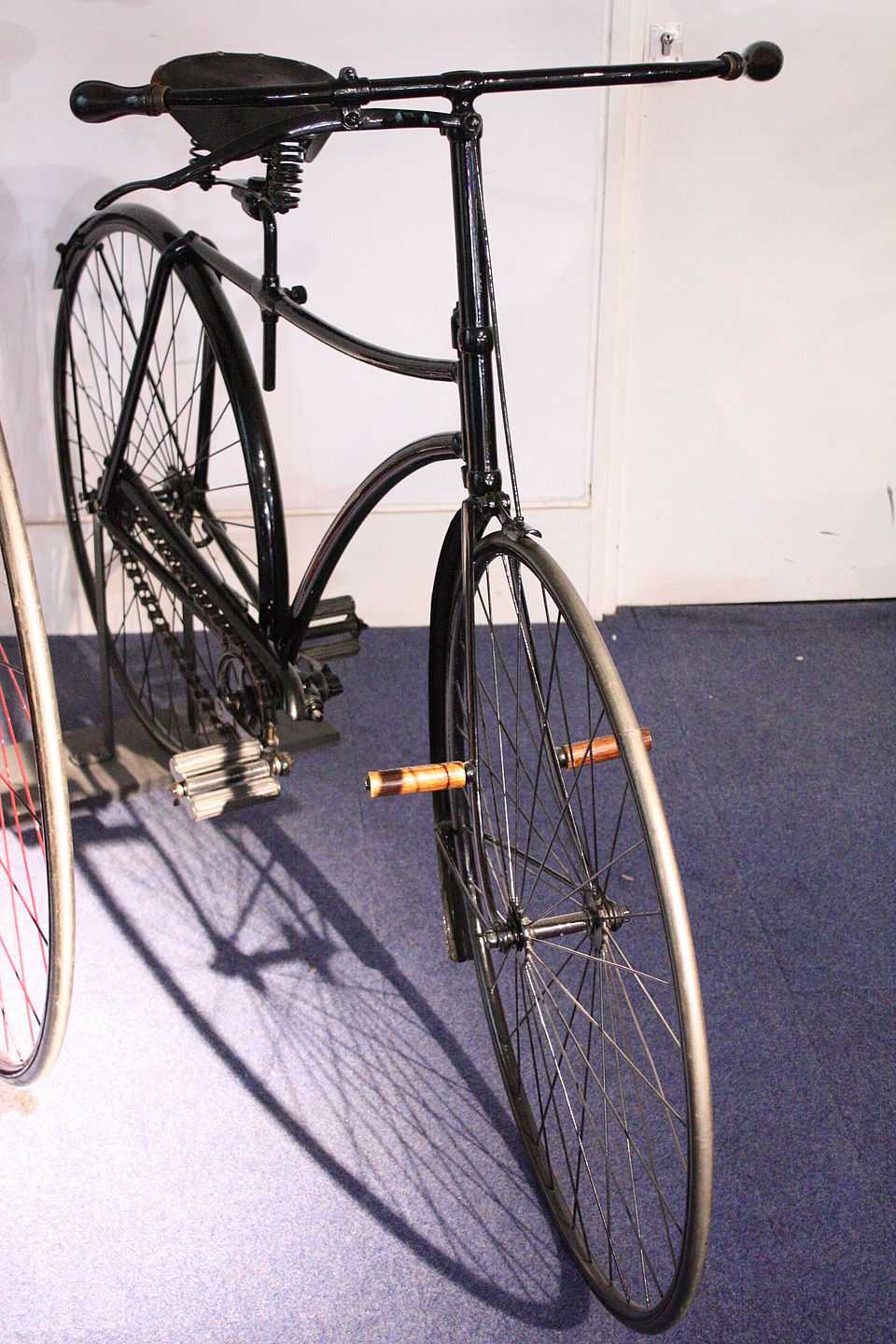
Designers like John Kemp Starley consolidated these breakthroughs into what became known as the "Safety Bicycle" in 1885 with his Rover model. This design featured a diamond-shaped frame, chain drive to the rear wheel, and two equally sized wheels, very much resembling the bicycles we ride today. The Safety Bicycle was efficient, stable, and, critically, much safer, making cycling accessible to a wider audience, including women. This period also saw standardization in wheel sizes and frame geometry, which was crucial for mass production and easier repairs.
Practical Tip: When you ride a modern bicycle today, you're experiencing the direct legacy of these late 19th-century innovations. The reliable chain drive, the stable geometry of two equal wheels, and even the fundamental comfort of pneumatic tires are all baseline expectations that were once revolutionary breakthroughs, highlighting the cumulative nature of the bicycle's invention.
The Evolving Legacy: Why "Who Invented The Bicycle" is a Timeline
The journey from Karl Drais's Laufmaschine to the modern bicycle illustrates that the answer to who invented the bicycle is not a simple name, but rather a dynamic timeline of ingenious contributions. Each inventor, engineer, and artisan played a vital role, taking existing concepts and pushing them further. Drais provided the critical foundation of steerable balance; Michaux introduced the power of pedals; and subsequent innovators, culminating in the Safety Bicycle, perfected the mechanics and comfort, making cycling a practical and enjoyable activity for the masses.
This iterative process of invention continues even today, with advancements in lightweight materials, sophisticated gear systems, electric assistance (e-bikes), and smart technology continually refining the bicycle experience. The story of the bicycle is a powerful reminder that true innovation often happens through cumulative improvements and collective human endeavor rather than solitary breakthroughs. It's an ongoing evolution, with each generation building upon the brilliance of those who came before.
Conclusion
In conclusion, while Karl Drais holds the esteemed position of introducing the world to the first steerable two-wheeled vehicle in 1817, the comprehensive answer to who invented the bicycle is a collaborative narrative. It encompasses Drais's fundamental concept of steerable balance, Pierre Michaux's pivotal addition of pedal power, and the subsequent innovations of the late 19th century that brought us the efficient, safe, and comfortable machine we recognize today. The bicycle is a masterpiece of incremental design, a product of many minds across several decades, each contributing a crucial piece to its incredible evolution. It stands as a timeless symbol of personal freedom, efficient transport, and enduring human ingenuity.